Laser
Pixel Peel vs. Deeper CO₂ Laser Resurfacing: What's the Difference?
CO₂ resurfacing is not a single treatment. Intensity, depth, and recovery vary widely, and the lighter end of that range suits many patients better than the deepest settings.

Laser Services
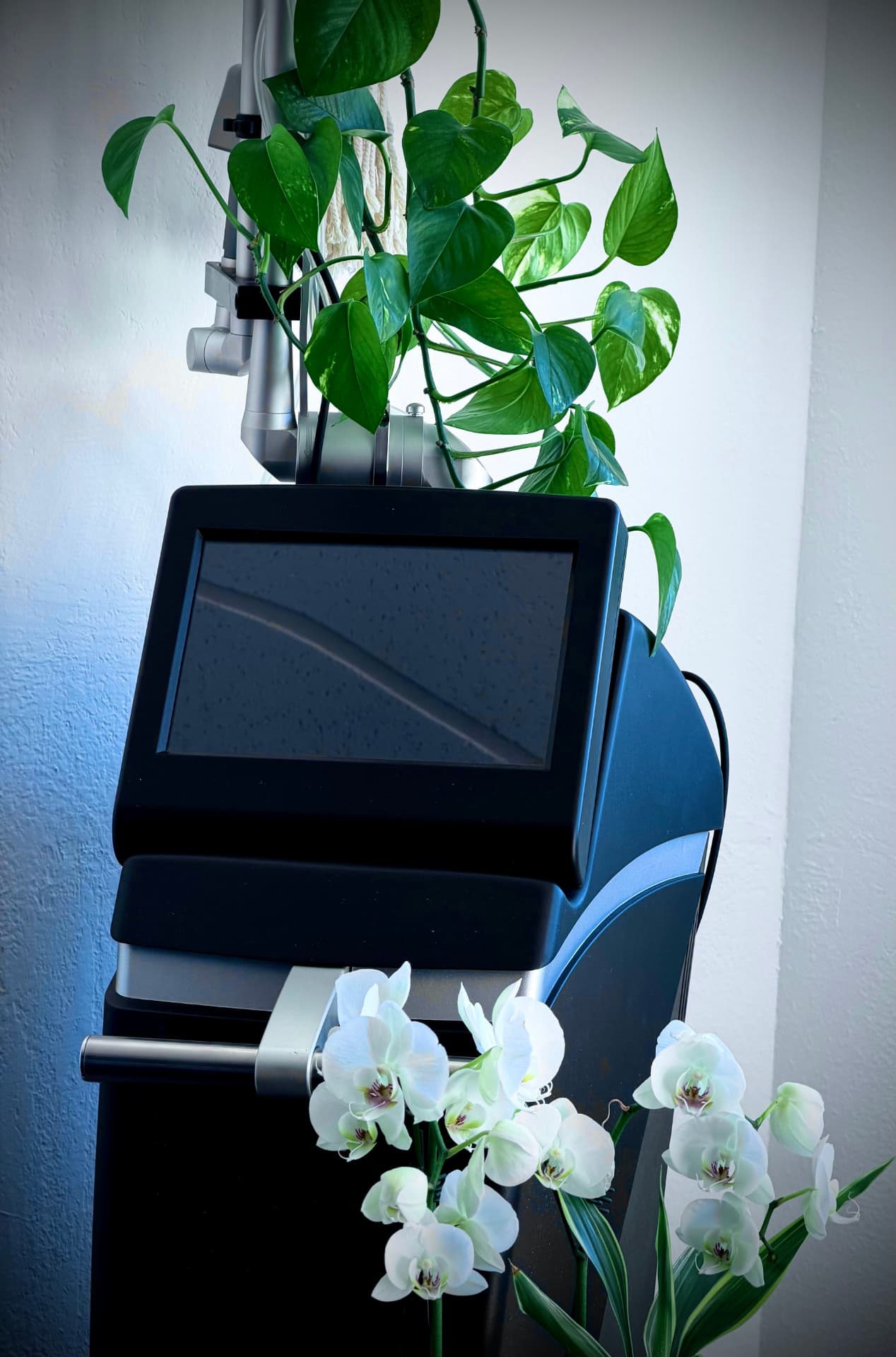
Pixel Peel is a lighter CO₂ laser resurfacing treatment performed on the Alma Hybrid platform, designed for patients seeking visible skin refinement with a more approachable recovery profile than deeper CO₂ resurfacing.
Overview
Pixel Peel is a low-parameter CO₂ resurfacing protocol performed on the Alma Hybrid platform, designed as a lighter, repair-focused entry point into laser resurfacing.
Alma describes Pixel Peel as a defined, low-parameter CO₂ resurfacing protocol delivered with Alma Hybrid — a platform built to treat across a range of resurfacing intensities. Rather than a single fixed treatment, Pixel Peel sits at the lighter end of that pathway and is intended to support visible skin refinement while generally offering a shorter recovery than deeper resurfacing protocols.
Every treatment is controlled and personalized. Settings, treated areas, and the number of sessions are selected after your skin, history, and goals are reviewed, so the approach reflects the individual rather than a standard protocol.
For patients who want meaningful refinement but are not ready to commit to a deeper resurfacing treatment, Pixel Peel can be a considered first step. Kërfree Aesthetics offers Alma Pixel Peel CO₂ laser resurfacing in Santa Barbara, always following professional evaluation.
Concerns
Pixel Peel is most often discussed for surface-level concerns where refinement, rather than deep correction, is the goal.
Method
Pixel Peel is a defined low-parameter CO₂ resurfacing protocol performed using Alma Hybrid. Controlled CO₂ laser energy is applied to the treatment area in a precise pattern, creating a lighter resurfacing effect intended to support the skin’s own renewal process.
Because the parameters are intentionally conservative, Pixel Peel is positioned differently from more aggressive CO₂ resurfacing. The aim is visible refinement with a recovery profile many patients find more manageable — not the depth of correction associated with deeper protocols.
Treatment is delivered by Kerri, who selects the approach after evaluating your skin. If a different technology is a better fit for your concern, that option is discussed openly at consultation.
Benefits
Pixel Peel is designed to refresh the appearance of the skin and improve visible texture, supporting a smoother, clearer-looking surface in appropriate candidates.
Controlled, low-parameter CO₂ energy is delivered on the Alma Hybrid platform, allowing a lighter resurfacing approach that can be tailored to your skin and goals.
In appropriate candidates, Pixel Peel may help improve the appearance of early signs of sun damage and visible surface-level skin damage.
Designed as a lighter resurfacing protocol, Pixel Peel generally offers a more approachable recovery than deeper CO₂ resurfacing. Recovery still varies by patient.
Comparison
CO₂ resurfacing is not one fixed treatment intensity. The same underlying technology can be delivered across a range of settings, and the intensity chosen shapes both the level of correction and the recovery that follows.
Pixel Peel uses lower CO₂ parameters and is positioned as a lighter entry point into resurfacing. Deeper protocols generally involve greater treatment intensity and a longer, more involved recovery, and they exist to address concerns that a lighter approach is not designed to correct.
Neither approach is inherently better — they serve different goals. The right choice depends on your skin, the concerns you want addressed, your desired level of correction, your tolerance for recovery, and professional evaluation.
Candidacy
Candidacy is individual and is confirmed through evaluation rather than assumed.
Pixel Peel may be appropriate for patients seeking visible skin refinement, improvement in the appearance of uneven texture, or attention to early signs of sun damage, while preferring a lighter resurfacing approach.
It is not suitable for everyone. Skin type, medical history, current skin condition, recent treatments, and your ability to follow aftercare all factor into the recommendation. If Pixel Peel is not the right fit, alternatives such as IPL Skin Rejuvenation or ClearLift may be discussed instead.
Results
Your treatment begins with consultation and skin assessment, followed by a personalized plan rather than a standard setting.
After your skin is assessed and your goals discussed, treatment parameters are selected for you. Controlled CO₂ energy is then delivered to the planned areas, with comfort measures reviewed beforehand.
Temporary redness, dryness, and peeling may occur as the skin responds. Treatment intensity and recovery vary between patients, and this remains a CO₂ laser resurfacing treatment — aftercare matters.
Diligent sun protection and following your post-treatment instructions are important after any laser resurfacing. Visible changes develop gradually as the skin recovers and renews, and individual results vary.
Whether Pixel Peel is used on its own or alongside other laser services over time is decided together at consultation.
Results
Patient results coming soon
Photography is only published with patient permission, so this space stays empty until approved results are available.
Questions
Related reading
Laser
CO₂ resurfacing is not a single treatment. Intensity, depth, and recovery vary widely, and the lighter end of that range suits many patients better than the deepest settings.
Laser
Recovery is not one experience. It scales with how deep and how aggressive the treatment was, and knowing the general pattern makes the first week far less unsettling.
Skin Health
Sun damage does not show up as one problem, which is why it is not treated with one solution. A practical guide to matching concerns to approaches.
Consultation
Every treatment begins with an honest conversation, a facial assessment, and a customized plan designed specifically for your goals.